Four temperature zones under one roof, with every case and pallet tracked. Tap through the zones below to see the room change with the temperature.
The hardest thing in 3PL isn't storing a dry pallet — it's taking a reefer off the port, holding it frozen, handling USDA-inspected protein, and still shipping a parcel in two days. We do all of it in the same building.
Tour the facility

Dry, palletized storage for shelf-stable goods and non-perishables.

For produce, dairy, beverages, and perishables that must stay cold.
Deep-freeze for protein, seafood, and frozen goods.

Every case scanned and weighed, in and out.
Temperature is only half of cold chain. The other half is knowing exactly what came in, what it weighed, where it sits and what left. Every case and pallet in our cold rooms is barcoded and recorded. See the system in detail →

For protein and other variable-weight product, we scan the barcode on every case and read its net weight straight from the label, with a photo of the label as a backup when a barcode will not scan. The result is a signed total-weight manifest for every load, in and out.

Each pallet gets a printed barcode tag at receiving that carries its item, lot, case count and storage zone. At release the tag is scanned, so the pallet that leaves is the pallet on the order, and lot and expiry follow the product the whole way.

Seal numbers, trailer details, product temperatures and condition are recorded on the receiving and release forms. Bills of lading and signed copies are scanned on the spot into clean, printable PDFs, with photos of the seal, the trailer and any damage attached to the same record.
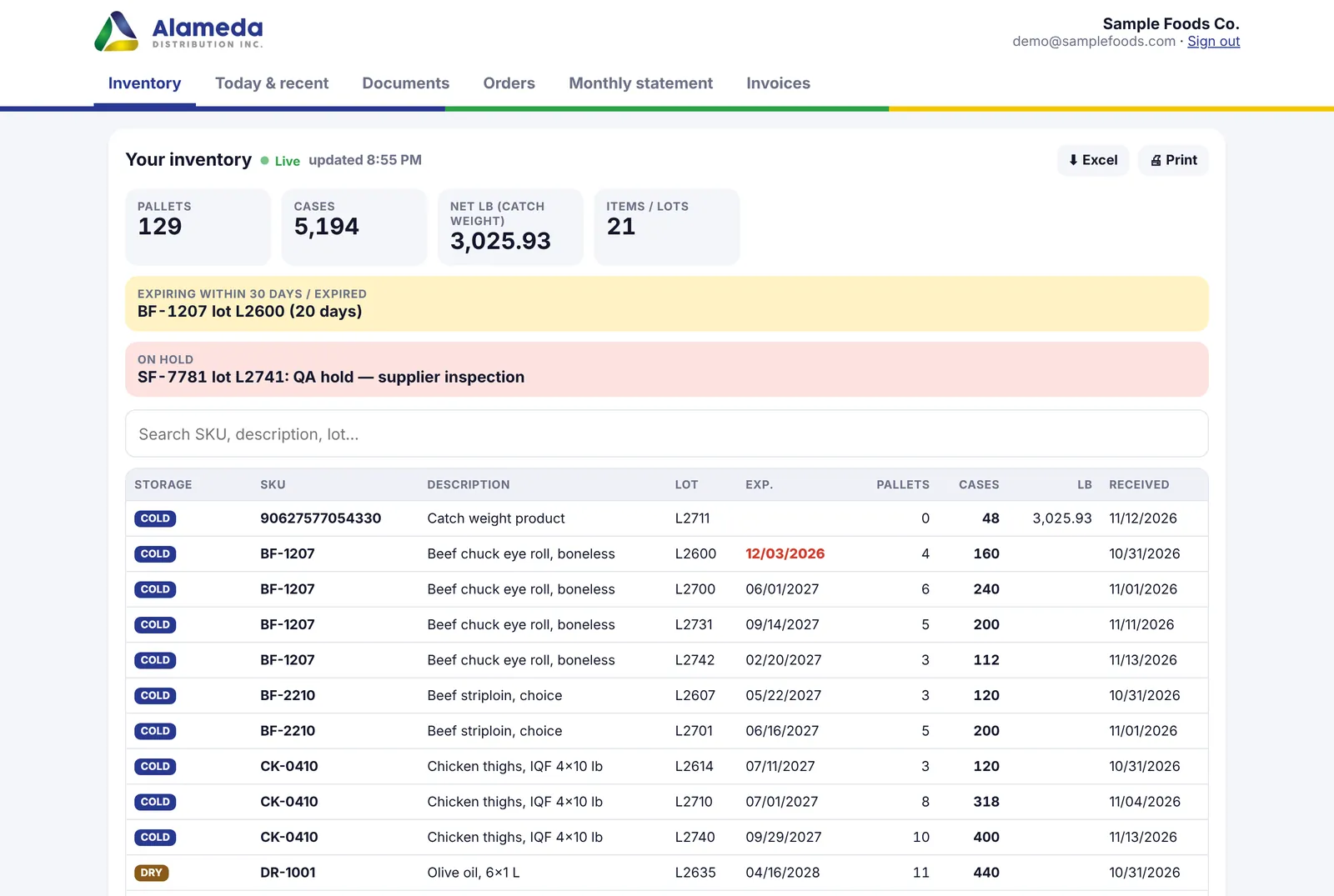
Log in to Alameda Third Eye to see what is on hand right now, by item and lot, with every receiving and release behind it. Accounts billed by weight are invoiced on recorded net weight, and each receiving carries its own invoice tied to its PO.
We'll keep the cold chain intact from the port to the parcel.
Request a quote